Check out this excellent article about the modern Bani Lam tribe, a subset of the medieval tribe of same name. Some sections of the first, old tribe of Bani Lam splintered, reformed, absorbed sections from other tribes, and become the modern day tribes of al-Dhafeer, al-Fudul, Aal Mughirah, and Aal Kathir (Al-E-Kassir in Farsi). The remainder of the tribe retained its tribal name, and:
…pushed out of northern Hejaz in the 9th/15th century, they moved to the lower Tigris-Euphrates region about 950/1550 (Oppenheim, II, pp. 320, 324; III, pp. 18-19). Late in the 10th/16th century they migrated to the east bank of the Tigris.
They are now settled in the ‘Amarah district of eastern Iraq and in the neighboring western part of the Khuzistan province of Iran. They are the wellspring of the Iranian Asils, at least in part. That would make a lot of sense, given that some of the strains of today’s Iranian Asils like Wadnan and Hamdani were originally Bani Lam strains. Some photos of these nice Iranian Wadnans below.
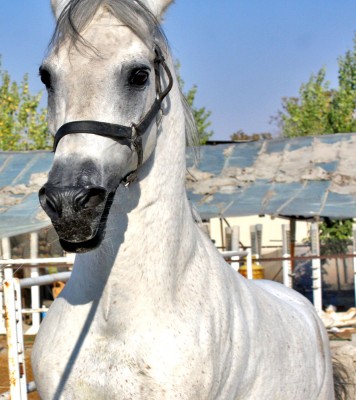
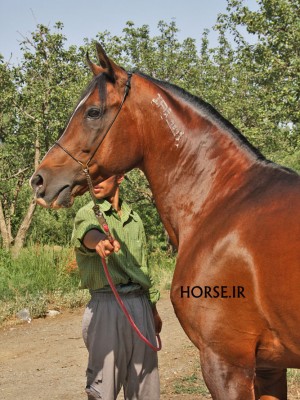
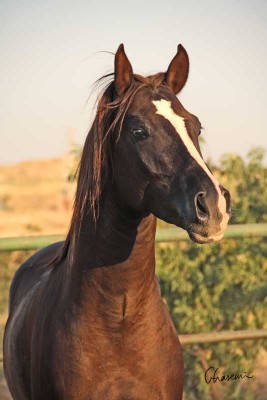
You may be wondering why the focus on the Bani Lam on this blog over the past few entries. I feel I am onto something, in terms of the beginning of Arabian horse strains, and that such beginning may be connected to both the Sharifs of Mecca and to the Bani Lam tribe in the Hijaz region of Arabia.
Oh, so interesting! This has been very enjoyable and educational to follow, and I am keen to hear more of your thoughts on the origin of Arabian horse strains.
The Iranian asils are certainly very handsome horses – the bay and chestnut both look as if they might be powerful horses, and I really like their faces – clean-cut and finely shaped, with beautiful bone structure.
I would like to get a pdf version of this report “book”. I am from this tribe and I want to get more information on my people.
what book, Mohammad?
From this article:
Perry, John R.. “BANĪ LĀM.” Encyclopaedia Iranica. Published December 15, 1988. https://www.iranicaonline.org/articles/bani-lam/
“During World War I the Banī Lām under Shaikh Ḡażbān answered the Turks’ call for a jehād and harassed the British forces holding the line of the Karḵa to protect the oil pipeline (Oppenheim, III, pp. 200-04). In the 1920s frequent disputes flared between the wālī of Pošt-e Kūh and the Banī Lām when they moved in from Iraq for the summer grazing, but during the next decade Reżā Shah’s government troops effectively reduced the scale of migration and accelerated sedentarization.”
I wonder what the connection of this Shaikh Gazban (Ghadban) is to Bani Lam strains of Arabian horses in Iran.
From this other article:
Qāʾem-Maqāmī, Jahangir. “ĀL-E KAṮĪR.” Encyclopaedia Iranica. Published December 15, 1984. https://www.iranicaonline.org/articles/al-e-kair-kuzestan/
“After Shaikh Ḥaddād the leadership of the Bayt Saʿd [branch of the Al Katheer tribe] passed to Shaikh Asad and then to his son Farḥān, who greatly increased the influence of the tribe. All the tribes settled between the Gulf and Dezfūl came under his sway. The tribe of Bayt Karīm [branch of the Al Katheer tribe] was sometimes dominated by Bayt Saʿd and sometimes independent”.
“About this same time Shaikh Ḵaẓʿal of the Banū Kaʿb was increasing his influence in the region and instigating various tribes to leave Farḥān and join him. The Bayt Karīm came under his direct influence. In 1303/1924 Shaikh Ḵaẓʿal’s power was brought to an end and all the tribes of Ḵūzestān came under the direct control of the central government. Thus ended the rebellious behavior of the Āl-e Kaṯīr.”
This is the Sh. Farhan Mary G. mentioned in her article, excerpt here:
“Towards the end of the nineteenth century, in the province of Khuzestan, which had never been completely under government control, sometimes more and sometimes less, a man of the Kaab tribe, by name Sheikh Khazal became powerful. Allegedly, with the help of the British, he wanted to extend his power to include all other Arab tribes of the province. Some of his more adjacent tribes made alliances with him and joined him, but, other tribes, and particularly the Al Kathir did not want his domination. However, with his allies Sheikh Khazal is so strong that eventually he arrives, so to speak, at the gate (boundaries) of the Al Kathir.
At that time the Sheikh of the Al Kathir was Sheikh Farhan, however, he was no longer young, and apparently did not believe his tribe stood a chance of withstanding an attack by Sheikh Khazal.”